
 EN
EN
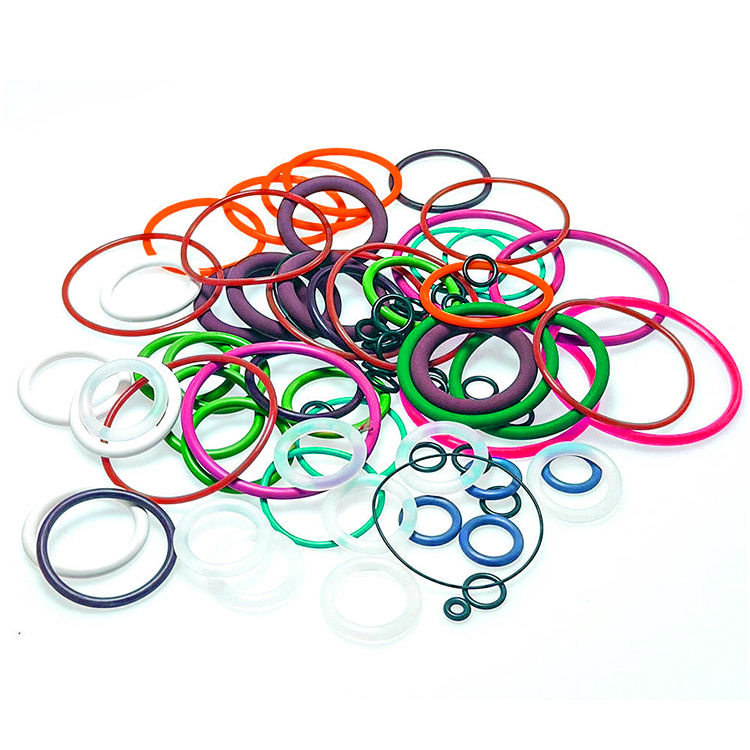
Why Custom Silicone Rubber O-Rings Deliver Superior Sealing Performance
The Demand for Application-Specific Silicone Rubber O-Ring Customization
These days, most industries need seals that fit their equipment specs exactly instead of settling for generic solutions. According to a recent study from Freedonia Group in 2024, about one third of all industrial sealing problems actually come down to O-rings that don't match properly either in size or materials. That's where custom made silicone rubber O-rings really shine. Engineers can tweak things like how hard the rubber is (usually between 40 and 80 on the Shore A scale), get those cross sections just right within tight tolerances (+/- 0.005 inches), and mix special compounds depending on what kind of pressure, temperature, or chemicals they'll face. Take semiconductor manufacturing as an example. The equipment there typically relies on peroxide cured silicone rings that meet strict 50 parts per million particle standards because even tiny contaminants can ruin entire batches in those super clean production areas.
How Design Flexibility Enhances Sealing Reliability and Efficiency
Customization enables performance-driven adaptations like:
- Asymmetric gland profiles to counteract uneven pressure distribution
- Triple-sealing lip geometries for rotating shaft applications
- Conductive silicone variants (10³–10⁴ ohm-cm resistivity) to prevent electrostatic discharge in explosive environments
These tailored designs reduce seal replacement frequency by 57% compared to standard O-rings, as shown in a 2023 ASME fluid systems study.
Case Study: High-Precision Machinery Using Custom-Molded Silicone O-Rings
A leading robotics manufacturer eliminated hydraulic leaks in articulating joints by switching to custom LSR (Liquid Silicone Rubber) O-rings with:
| Parameter | Standard O-Ring | Custom Solution |
|---|---|---|
| Operating Temperature | -40°F to 302°F | -76°F to 482°F |
| Compression Set (22 hrs) | 25% | 8% |
| Cycle Life | 50,000 | 200,000+ |
The redesigned seals with dual-material overmolding improved mean time between failures (MTBF) by 73% while sustaining 450 psi pulsating pressures.
Material Advantages of Silicone Rubber for Industrial O-Rings
Silicone Compound Types (MQ, VMQ, FVMQ) and Their Tailored Applications
The molecular makeup of silicone rubber gives engineers quite a few options when they need specific compounds for tough industrial problems. Take MQ silicone, which works great for most standard applications where there's only average contact with chemicals. Then we have VMQ silicone that actually stands up better to tearing, so it's often used in those moving parts of cars and planes where seals get stretched and stressed. When things get really harsh, FVMQ comes into play. This type resists fuels while still staying flexible enough to work properly, which is why airplane fuel lines and chemical plant equipment rely on it so much. The different formulas make sure everything runs smoothly even under all sorts of conditions, whether it's during the high heat of medical device sterilization processes or in the clean rooms where semiconductors are made.
Extreme Temperature Resistance: -65°F to 500°F Performance Range
Silicone rubber O rings stay flexible and keep their seal even when temperatures swing from super cold to really hot stuff. They work great between -65 degrees Fahrenheit down in those freezing food processing plants all the way up to 500 degrees Fahrenheit inside engines where things get extremely hot. Traditional materials like nitrile or EPDM just can't handle these extremes without getting brittle or breaking down over time. A recent report from Polymer Sealing Solutions back in 2023 showed something pretty impressive too. When companies switched to custom made silicone seals for their industrial ovens instead of using fluorocarbon options, they saw thermal failures drop by around 72%. That kind of reliability makes a big difference in operations that run day after day at extreme temperatures.
Chemical Compatibility with Oils, Fluids, and Industrial Media
Silicone materials that have been specially formulated can stand up to swelling and breakdown caused by hydraulic fluids, harsh cleaning solutions ranging from pH 2 to 12, and even those tricky aromatic hydrocarbons found in fuel systems. Research published in 2022 looked at how different materials hold up over time. The results were pretty impressive for VMQ silicone which kept about 94% of its original tensile strength after sitting in ASTM oil for 1,000 straight hours. That's way better than regular nitrile rubber which only managed around 67%. Because they don't react much with these substances, silicone O rings work great as seals in places where there are automotive transmission fluids or when handling sensitive stuff in pharmaceutical production lines.
UV, Ozone, and Weather Resistance for Outdoor Durability
Silicone’s saturated polymer backbone provides unmatched environmental resistance:
- 50+ years service life in solar panel junction boxes under continuous UV exposure
- No ozone-induced cracking after 100 cycles (ASTM D1149)
- Waterproof sealing in offshore wind turbine connectors
Field data from coastal infrastructure projects reveals custom silicone seals maintain 98.6% compression recovery after decade-long salt spray exposure—significantly higher than EPDM equivalents at 83%.
Low Compression Set Ensures Long-Term Seal Integrity in Dynamic Systems
Silicone materials with advanced formulations can get compression set readings under 10%, according to ASTM D395 testing standards. This matters a lot when making reusable stoppers for pharmaceutical vials that need to survive over 500 autoclave cycles, or when creating vibration dampers for CNC machines and seals for hydraulic cylinders on construction sites. The numbers tell the story too. Custom made silicone O rings still hold about 89 percent of their initial sealing power even after sitting in reciprocating pumps for ten whole years. That's roughly three times better than what we typically see from regular elastomer materials.
Key Industrial Applications of Custom Silicone O-Rings
Reliable Sealing in Oil & Gas, Automotive, and Aerospace Under Extreme Conditions
Silicone rubber O-rings are making waves in solving tough sealing problems throughout various heavy industries. For instance, in oil and gas fields, these rings handle harsh conditions including contact with hydrocarbons and pressure levels above 5,000 PSI without losing their sealing properties. The automotive sector finds them particularly useful because of how well they stand up to extreme temperatures, which makes them ideal for parts like fuel lines and turbochargers. Some top manufacturers have actually seen their products last around 30 percent longer than regular rubber alternatives. When it comes to aerospace applications, there's no beating silicone when dealing with hydraulic systems and engines that face both sudden temperature changes and constant vibrations at the same time. This kind of performance is why so many engineers specify silicone for these demanding environments.
High-Performance Trends Across Demanding Industrial Sectors
Three trends dominate industrial sealing:
- Adoption of VMQ silicone compounds for steam valve seals in energy production
- Ultra-clean FVMQ formulations for semiconductor manufacturing cleanrooms
- Conductive silicone hybrids for EMI shielding in electrified machinery
Use in Electronics and Precision Equipment Requiring Stable, Non-Reactive Seals
Silicone’s dielectric stability makes it ideal for sealing MRI machine coolant lines and protecting PCB components from moisture ingress. Unlike conventional rubbers, medical-grade silicone O-rings exhibit less than 0.1% particulate shedding after repeated sterilization cycles, ensuring reliability in sensitive electronic and medical environments.
Emerging Niche Markets Driving Demand for Bespoke Silicone Sealing Solutions
Hydrogen fuel infrastructure and lab-grown meat bioreactors now specify peroxide-cured silicone O-rings with zero extractables. These emerging markets require certifications beyond ISO 9001 while maintaining functionality at cryogenic temperatures or pH extremes, pushing innovation in ultra-pure, application-specific sealing solutions.
Medical, Pharmaceutical, and Food-Grade Silicone O-Rings: Safety and Compliance
Biocompatible and Food-Safe Materials: Meeting FDA, USP Class VI, and 3A Standards
Silicone rubber O rings perform exceptionally well in situations where safety matters most because they don't react chemically and meet all sorts of strict industry requirements. Materials that have passed USP Class VI testing go through thorough checks for toxicity and skin irritation, which basically means they won't harm living tissues when needed. For food related applications, FDA approved silicone complies with regulation 21 CFR 177.2600 allowing safe repeated contact with food products. There's also special 3A certified versions specifically made for handling milk and other drinks during processing. What makes these seals so valuable is their ability to handle harsh sterilization methods like steam autoclaves at temperatures reaching around 275 degrees Fahrenheit, plus they survive gamma radiation treatment as well. This combination of properties explains why hospitals and drug manufacturers rely on them heavily throughout their clean room operations.
Applications in Medical Devices, Pharmaceutical Processing, and Food & Beverage Systems
Custom silicone O-rings prevent contamination in sensitive applications:
- Medical: Seal insulin pumps and ventilators without leaching chemicals, critical for drug-delivery systems requiring precision.
- Pharmaceutical: Maintain integrity in lyophilization chambers and bioreactor ports exposed to aggressive sanitizers.
- Food/Beverage: Withstand CIP (clean-in-place) chemicals in bottling lines and dairy homogenizers.
Balancing Regulatory Compliance With Cost-Effective Manufacturing Strategies
Getting products up to FDA, NSF, and 3A standards means working with materials that can be traced back through every step of production plus processes that have been properly validated. But here's where things get interesting - when companies start using those advanced mold flow simulations, they're actually cutting down on prototype expenses by somewhere around 30 to 40 percent. Most manufacturers spend quite a bit of time fine tuning those durometer ratings which typically fall between 30 and 80 on the Shore A scale while also experimenting with different cross linking techniques just to hit those performance targets without breaking the bank. Take peroxide cured VMQ silicone for instance. This stuff actually passes the NSF ANSI 61 requirements needed for drinking water applications and does so at about 15% less than what specialty fluorosilicones would cost. Makes sense why many in the industry are making this switch these days.
From Design to Production: Engineering Custom Silicone O-Rings for Exact Fit
Prototyping to Mass Production: Streamlining the Customization Process
Manufacturers today are using fast prototyping methods such as 3D printed molds along with computer aided design simulations which can cut down product development time by around 60 percent according to Rubber & Plastics News from last year. When companies test their designs multiple times during production they catch shape problems much earlier on. This makes sure that when thousands of silicone rubber O rings get made for things like airplanes or medical devices, they fit within very tight specifications of plus or minus 0.002 inches. The whole process works in stages, cutting down material waste significantly as production scales up from small runs of just 500 pieces all the way to massive orders of half a million units at once.
Advanced Molding Techniques for Tight Tolerances and Complex Geometries
High-precision injection molding accommodates asymmetrical cross-sections and micro-grooves impossible with standard extrusion. Quad-seal profiles with 0.5 mm wall thicknesses achieve <0.1% leakage rates in vacuum chambers. Liquid silicone rubber (LSR) molding produces flash-free edges, reducing post-processing costs by $0.18/unit in automotive applications.
Collaborating With Engineers to Optimize O-Ring Performance
Cross-functional teams analyze thermal cycling (Ζ300°F/minute) and chemical exposure to select appropriate silicone grades. A 2023 sealing solutions study found engineer-manufacturer collaboration improves seal lifespan by 40% in high-vibration settings. This partnership ensures custom O-rings balance elasticity (50–80 Shore A), low compression set (<10%), and regulatory compliance without unnecessary over-engineering.
FAQ
Why are custom silicone O-rings preferable over standard O-rings?
Custom silicone O-rings are tailored to fit exact equipment specifications, offering advantages like enhanced sealing reliability, adaptability to various industrial conditions, and reduced replacement frequency compared to standard O-rings.
What industries benefit from custom silicone rubber O-rings?
Industries like oil & gas, automotive, aerospace, semiconductor manufacturing, and medical sectors benefit from these O-rings due to their resistance to extreme temperatures, chemicals, and environmental elements.
How do silicone O-rings perform under extreme temperature conditions?
Silicone O-rings maintain flexibility and sealing integrity across a temperature range of -65°F to 500°F, making them ideal for applications in environments subject to temperature fluctuations.
Are custom silicone O-rings safe for food and medical use?
Yes, custom silicone O-rings meet FDA, USP Class VI, and 3A standards for biocompatibility and food safety, ensuring they can be used safely in medical, pharmaceutical, and food & beverage systems.
Table of Contents
- Why Custom Silicone Rubber O-Rings Deliver Superior Sealing Performance
-
Material Advantages of Silicone Rubber for Industrial O-Rings
- Silicone Compound Types (MQ, VMQ, FVMQ) and Their Tailored Applications
- Extreme Temperature Resistance: -65°F to 500°F Performance Range
- Chemical Compatibility with Oils, Fluids, and Industrial Media
- UV, Ozone, and Weather Resistance for Outdoor Durability
- Low Compression Set Ensures Long-Term Seal Integrity in Dynamic Systems
- Key Industrial Applications of Custom Silicone O-Rings
- Medical, Pharmaceutical, and Food-Grade Silicone O-Rings: Safety and Compliance
- From Design to Production: Engineering Custom Silicone O-Rings for Exact Fit