
 EN
EN
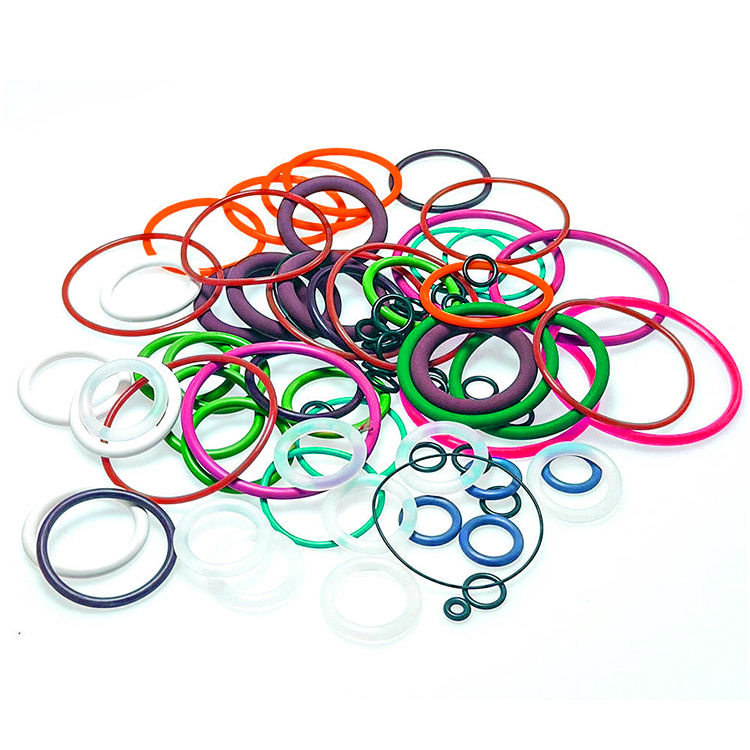
Understanding O-Ring Materials: NBR, FKM, EPDM, Silicone, and NR
Key Properties of Common O-Ring Elastomers
Picking the correct O-ring material really comes down to how well the rubber performs under specific working conditions. Take Nitrile Butadiene Rubber (NBR) for instance it stands up pretty well against oils and fuels and works reliably between about minus 40 degrees Celsius all the way up to 120 degrees Celsius which makes it quite affordable for most hydraulic system needs. Then there's Fluorocarbon Rubber (FKM) that can handle much hotter environments reaching up to around 200 degrees Celsius while still resisting harsh chemicals such as acids and solvents. Because of these properties FKM is often seen in places like aircraft manufacturing and chemical plants where reliability matters most. Ethylene Propylene Diene Monomer (EPDM) is another good choice especially outdoors since it doesn't break down easily when exposed to ozone or bad weather making it popular for things like heating ventilation air conditioning units and various water handling equipment. Silicone has something special going for it too maintaining its flexibility even at extremely cold temperatures down to negative 60 degrees Celsius and staying flexible up past 230 degrees Celsius plus it insulates electricity so we find it frequently in medical devices and food processing machinery. Natural Rubber (NR) might seem tempting because it stretches a lot and bounces back nicely for those lower pressure moving parts but watch out it breaks down fast if it gets near oil or spends too much time in sunlight.
According to industry research on O-Ring material compatibility, temperature and chemical exposure account for 68% of premature seal failures (2024 data), reinforcing the importance of precise material selection.
Performance in Temperature, Chemical, and Pressure Extremes
Each elastomer has distinct limitations that define its optimal use:
- NBR degrades rapidly in ozone and UV environments
- EPDM swells significantly when exposed to hydrocarbon fluids
- FKM can become brittle below -20°C unless specialty grades are used
- Silicone, while thermally stable, has low tensile strength and is prone to tearing under mechanical stress
For high-pressure applications exceeding 200 Bar, materials with Shore A hardness between 80–90 are required, often combined with backup rings or reinforced designs to prevent extrusion.
Selecting the Right Material for Industry-Specific Applications
The materials selected for different industries depend heavily on what the environment throws at them plus what regulations require. Take automotive fuel systems for instance, these often go with FKM because it holds up really well when mixed with both regular gasoline and those ethanol blends we see more of nowadays. The pharmaceutical world along with biotech labs tend to stick with platinum cured silicone instead. Why? Because this stuff doesn't react with anything and can take all those rounds of sterilization without breaking down. When looking at oil and gas applications though, things get much tougher. That's where FFKM comes into play, which is basically a type of perfluoroelastomer. These seals are put through hell at wellheads dealing with temps over 300 degrees Celsius and nasty stuff like hydrogen sulfide that would eat most materials alive.
Balancing upfront cost with service life is critical. For instance, upgrading from NBR to FKM in chemical processing valves reduces replacement frequency by 70%, delivering long-term savings despite higher initial investment.
High-Precision Manufacturing: Ensuring Dimensional Accuracy and ISO Compliance
Modern O-ring manufacturing achieves tolerances as tight as ±0.001" (0.025 mm), crucial for leak-free performance in hydraulic, pneumatic, and semiconductor applications. With 80% of sealing failures linked to dimensional inaccuracies (Sealing Technology Institute 2023), precision production and verification are non-negotiable.
Tight Tolerances in Custom O-Ring Production
Consistent cross-sectional diameters and concentricity are maintained through climate-controlled environments and closed-loop tooling systems. Statistical process control (SPC) ensures diameter variation remains ±0.5% across batches—essential for aerospace and high-pressure industrial systems where even minor deviations compromise integrity.
Adhering to ISO 3601 Standards for Universal Compatibility
ISO 3601-1:2024 specifies key parameters including hardness (50–90 Shore A), compression set limits (<25% after 24 hours at 212°F), and six precision classes for diameter tolerances. Compliance guarantees interchangeability across global standards such as DIN, SAE, and JIS, enabling seamless integration into international equipment designs without costly re-engineering.
Advanced Molding Technologies for Consistent Precision
When transfer molding is done with platen temperatures kept within just 1 degree Fahrenheit variance, it really cuts down on flash formation and gives much better curing throughout the part. For liquid silicone rubber (LSR) injection molding, we're talking about components that have surface finishes measured in microns and maintain their shape incredibly well over time. After the initial molding process, there's usually another step called post-curing which brings down shrinkage rates below 0.2%. This matters a lot when making those big diameter seals needed for wind turbines' pitch control systems where even small dimensional changes can cause serious problems during operation.
Custom O-Ring Development: From Prototype to Factory Wholesale Production
Designing Custom Sizes and Configurations for Unique Sealing Needs
When developing custom O rings, the process starts by turning application needs into detailed CAD designs. Material compatibility checks get combined with various simulation software so engineers can forecast how these rings will act when exposed to different pressures, temperatures, and chemicals. Take automotive fuel injectors for instance they need special FKM O rings with very tight tolerances around plus or minus 0.15 mm just to stop fuel vapors from leaking through. On the other hand, medical implants call for something completely different. These applications typically use biocompatible silicone that's been cured with platinum, meeting those strict USP Class VI standards that ensure safety inside the human body.
Rapid Tooling and Prototyping for Fast Iteration
Compression molding enables functional prototypes within 72 hours, allowing rapid testing of fit, function, and material performance. Modular mold systems support quick design adjustments—such as modifying cross-sections or lip geometries—without full retooling, accelerating validation for dynamic sealing applications.
Scaling Efficiently from Small Batches to High-Volume Wholesale Orders
When the design gets the green light, production moves over to automated injection molding systems that can hold ISO 3601 tolerances around ±0.08 mm throughout batches of over half a million parts. The combination of cavity duplication techniques along with Six Sigma quality checks means most manufacturers hit about 99.8% part consistency. And this approach cuts down on unit costs significantly, somewhere between 40 to 60 percent when compared to what it costs during the prototype phase. Such large scale manufacturing capabilities really work wonders for just-in-time supply chain operations. Think about how automotive companies need thousands of identical components week after week, or aerospace firms requiring precision parts without delays. Even industrial automation equipment makers benefit from these consistent mass production runs.
Industrial Applications and Market Demand for Custom Rubber O-Rings
Critical Use Cases in Automotive, Aerospace, Medical, and Oil & Gas Sectors
O-rings that perform well are really important for systems where failure isn't an option. Take automotive applications for instance. The NBR and FKM seals stop fuel and transmission fluids from leaking out even when temperatures reach around 250 degrees Fahrenheit. Looking up at the skies, aircraft manufacturers depend heavily on silicone O-rings because these components need to hold together under extreme conditions. At altitudes above fifty thousand feet, there's sudden pressure changes that could compromise system integrity if not properly sealed. Down below ground level, oil companies work with peroxide cured EPDM seals specifically designed to withstand hydrogen sulfide exposure in those harsh sour gas environments. These specialized materials make all the difference in maintaining safe operations across different industries.
| Industry | Key O-Ring Requirements |
|---|---|
| Medical | Biocompatibility, autoclave stability (134°C steam), resistance to gamma radiation |
| Semiconductor | Ultra-low particulate shedding, <0.01% compression set after 10,000 cycles |
| Food Processing | FDA-compliant materials, resistance to CIP (Clean-in-Place) sanitizers at 85°C |
Growing Need for Reliable, High-Performance Sealing Solutions
Market analysts expect the worldwide demand for custom O-rings to climb around 7.2 percent each year until 2028 according to Yahoo Finance data from last year. This growth comes mainly from two big trends: expanding renewable energy projects and the rise of Industry 4.0 automation across manufacturing sectors. Take wind turbines for instance – these massive structures need something like 2 million special O-rings every single year just to keep their hydraulic pitch systems safe from saltwater damage. The tech world is also seeing some interesting developments lately. Multi-lumen O-rings are becoming increasingly popular because they solve tricky sealing problems in EV battery cooling systems. These new designs handle both dielectric fluids and thermal management materials at the same time, which was practically impossible with older sealing solutions.
Frequently Asked Questions
- What is the primary function of O-ring elastomers? O-ring elastomers are designed to seal two or more parts, preventing the passage of liquids or gases and ensuring system integrity under pressure and temperature variations.
- Which O-ring material is best for high-temperature applications? Fluorocarbon Rubber (FKM) is highly suited for high-temperature environments as it can resist temperatures up to 200 degrees Celsius and withstand harsh chemicals.
- Why is silicone often used in medical devices? Silicone is preferred in medical devices due to its ability to maintain flexibility at extreme temperatures, and because it does not react chemically with other materials or affect electrical insulation.
- What factors should be considered when selecting the right O-ring material? When selecting O-ring materials, consider working environment conditions, chemical exposure, temperature extremes, pressure requirements, and industry-specific regulations.
- How does ISO 3601 compliance affect O-ring manufacturing? Compliance with ISO 3601 standards ensures O-rings have standard dimensions and functionality, offering global interchangeability and consistent performance.